Insora
Insora is a secure AI workspace for European small and medium businesses. It takes an important decision, breaks it into testable hypotheses and grounded evidence, and then goes after the information gaps that would most change the answer. I co-founded it after 50+ discovery conversations across about 25 SMEs, and I led engineering there for a year.
- Role
- Co-founder & CTO
- Timeline
- July 2025 — July 2026
- Stack
- Neo4j, Qdrant, FastAPI, Flask, PostgreSQL, Redis, Celery, React + Vite, Hetzner (Frankfurt) with an Azure alternative
The problem
I did most of the discovery calls before we wrote much of the product, and the pattern was surprisingly consistent. The expensive decisions weren't blocked by a lack of documents. Teams had too much information, spread across tools and people, and no good way to tell which piece could actually change the decision. And nobody trusted an AI answer they couldn't audit.
What I built
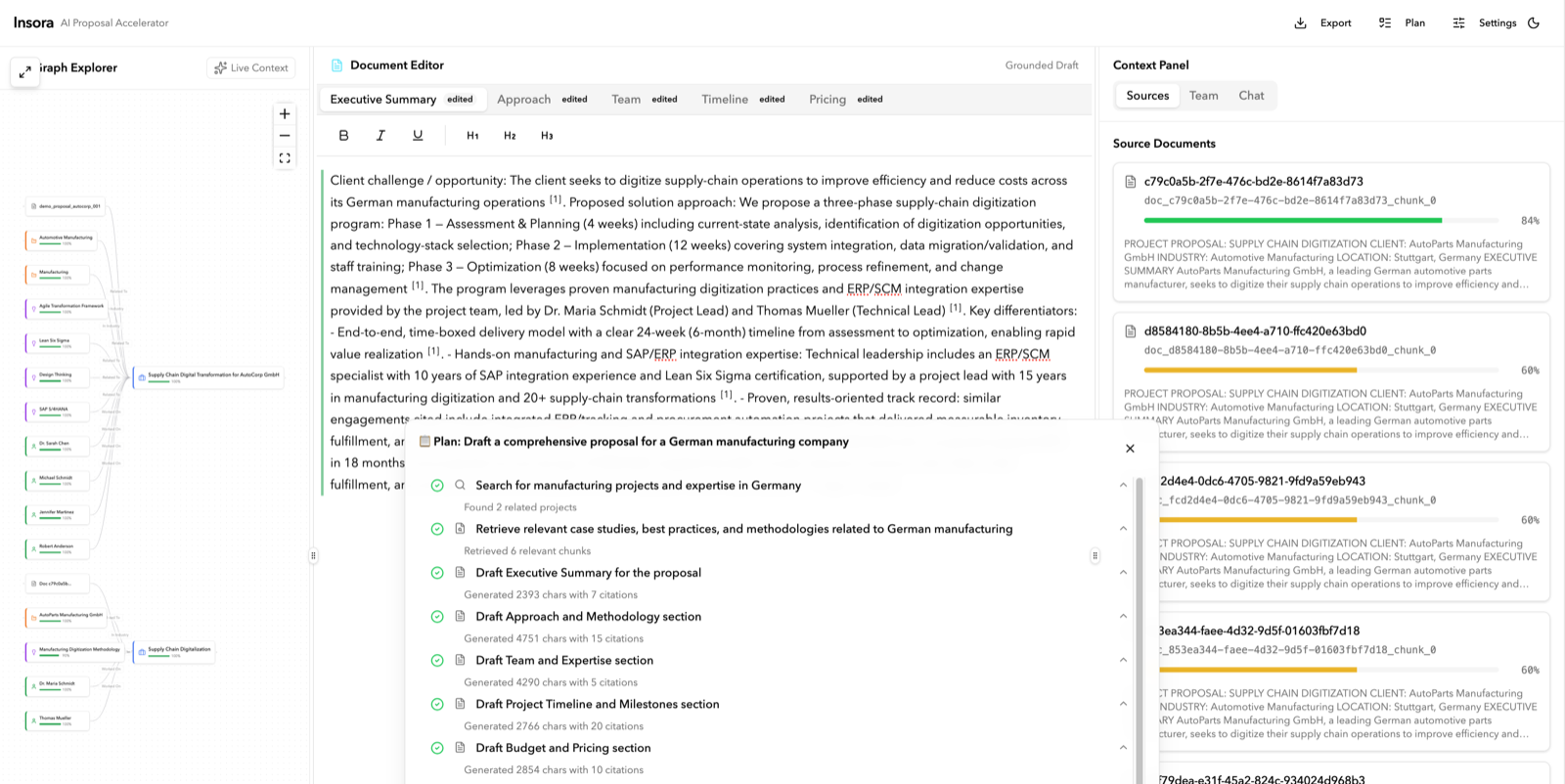
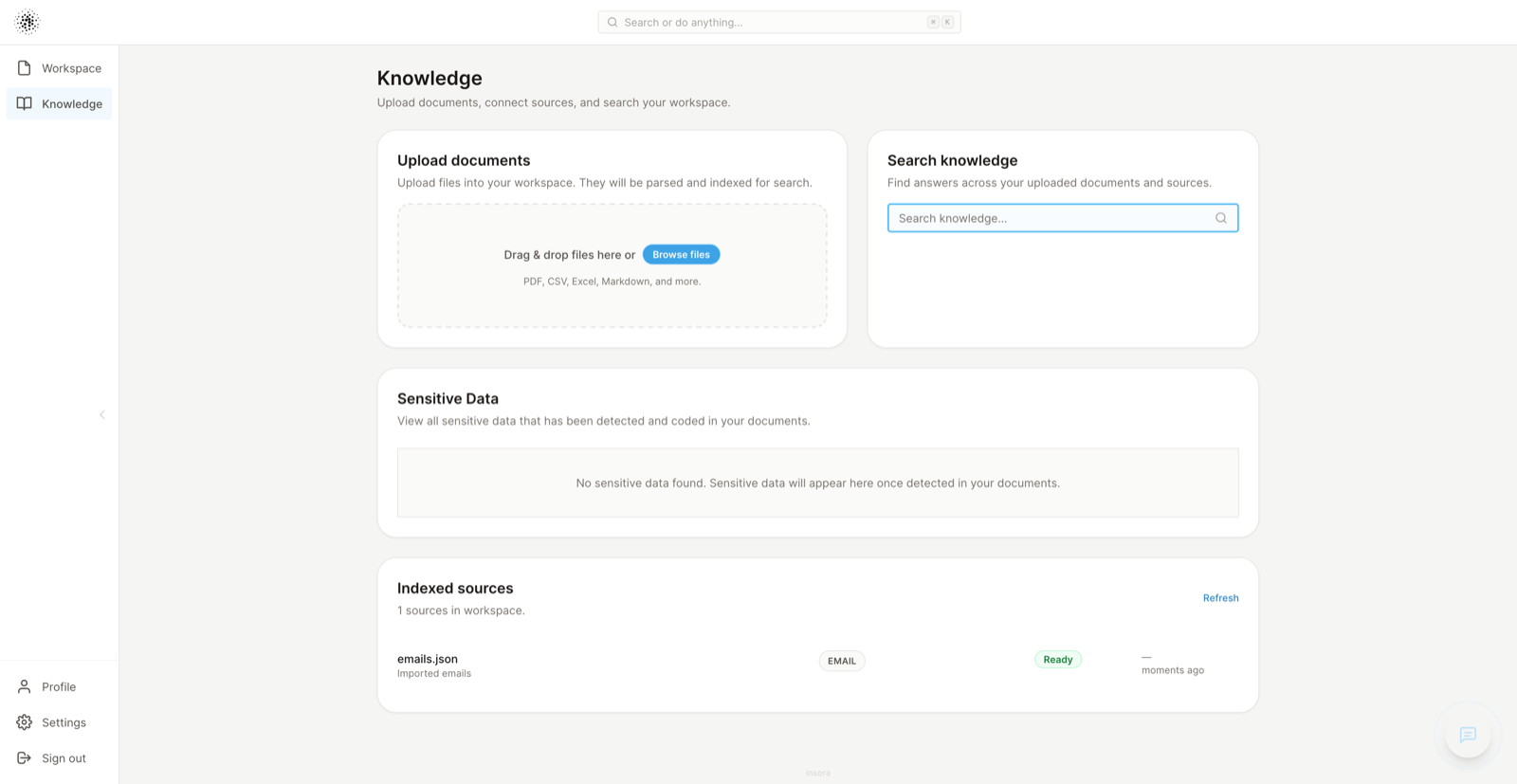
The system turns a question into hypotheses, ranks the information gaps by how much resolving each one would change the recommendation, and then answers them with evidence traced back to its source. Underneath there's hybrid graph and vector retrieval over Neo4j and Qdrant, specialized retrieval and verification agents, policy constraints, and an EU-only deployment on Hetzner in Frankfurt that a customer's compliance team could actually sign off on.
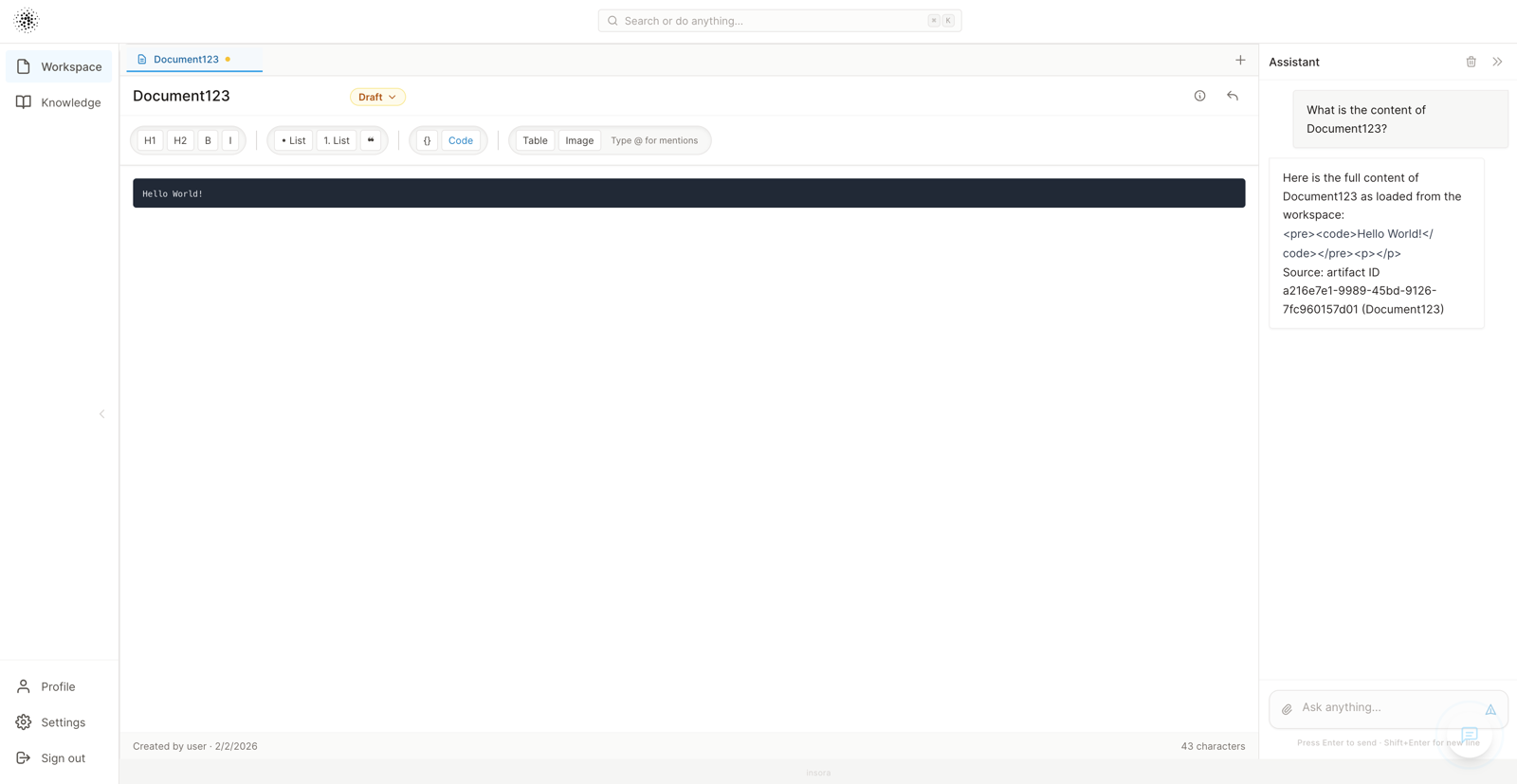
I built the AI system and most of the product around it, from the retrieval layer to the React front end to the deployment.
Results
Our pilot was with a European scientific-instrumentation company, and I delivered it in six days and 54 commits. The system answered 25 expert-level questions about their MeV-UED instrument across a corpus of more than 150 research papers, with 100% grounded citations and zero hallucinations or contradictions found by their domain experts. It also beat their internal tool on accuracy, which was a good moment.
What I'd do differently
Retrieval quality was never really the bottleneck. Trust was. Customers cared much less about recall than about seeing why an answer was defensible, which is why the verification layer ended up carrying the product.
The real mistake was sequencing. We spent months on graph infrastructure before the first pilot, and then the pilot itself took six days once we had an actual user. These days I'd insist on having a piloting user before any architecture decision that takes more than two weeks to reverse. The other lesson is about me. I'm at my best when the problem is technical and hard, and I underinvested in distribution. That's a big part of why I'm so explicit about wanting a co-founder who knows a market.